


Who To Call To Remove Mould From Walls In Toronto?
Mould on walls is never just an eyesore. It’s a warning sign that moisture has overstayed its welcome and started a quiet takeover behind paint, drywall, and insulation.
In Canadian homes, where seasonal humidity, freezing temperatures, and sudden thaws collide, mould problems often trace back to water damage that went unnoticed or untreated.
Knowing who to call—and when—can protect your health, your property, and your wallet.
Let’s get right into it!
WHAT CAUSES MOULD TO GROW ON WALLS?
Mould needs only three things to thrive: moisture, organic material, and time. Walls conveniently provide two of those by default.
Drywall paper, wood framing, and insulation are all perfect food sources. Moisture is the wild card, and it usually comes from places homeowners don’t immediately see.
Common causes include slow plumbing leaks inside walls, roof leaks that travel downward before showing themselves, condensation from poorly insulated exterior walls, bathroom and kitchen humidity without proper ventilation, basement seepage, and flood events.
In Canada, freeze-thaw cycles often crack pipes or foundations, releasing water into wall cavities where mould can begin growing within 24 to 48 hours.
What makes wall mould particularly dangerous is how long it can grow unnoticed. By the time you see stains, bubbling paint, or smell a musty odour, the problem has often spread well beyond the surface.

IS MOULD ON WALLS DANGEROUS?
Yes, and not just structurally.
From a health standpoint, mould spores can aggravate asthma, trigger allergies, cause chronic coughing, headaches, fatigue, and respiratory irritation. Children, seniors, and people with compromised immune systems face higher risks.
Structurally, mould weakens drywall, rots wooden studs, degrades insulation, and can compromise entire wall assemblies. Left untreated, it can turn a localized issue into a major renovation.
Financially, mould reduces property value and can complicate insurance claims if it’s linked to long-term neglect rather than sudden water damage.
WHO SHOULD YOU CALL TO REMOVE MOULD FROM WALLS?
You should call a certified mould remediation or emergency water damage restoration company.
These professionals don’t just clean visible mould; they identify and eliminate the moisture source, contain airborne spores, remove contaminated materials safely, and dry the structure properly to prevent recurrence.
Look for companies with IICRC (Institute of Inspection, Cleaning and Restoration Certification) training. In Canada, insurance providers and health authorities often recognize this certification as the industry standard.
General contractors, handymen, or cleaning services may remove surface mould, but they usually lack the equipment and training to handle hidden contamination, containment, and air quality control. That’s how mould comes back—often worse.
WHY YOU SHOULD NOT REMOVE MOULD YOURSELF
DIY mould removal often creates more problems than it solves.
Scrubbing mould releases spores into the air, spreading contamination to other rooms. Without proper containment and negative air pressure, spores settle into carpets, furniture, and HVAC systems. Household cleaners may remove stains but won’t address mould embedded in porous materials.
Improper removal can also void insurance coverage. Many policies require professional mitigation to document the cause and scope of damage correctly.
In short, DIY fixes treat symptoms, not the disease.
WHAT DOES PROFESSIONAL MOULD REMOVAL INVOLVE?
Professional remediation follows a structured, safety-first process.
Technicians begin with moisture detection using meters and thermal imaging to locate hidden water sources.
They establish containment barriers and create negative air pressure to prevent cross-contamination. HEPA-filtered air scrubbers clean the air continuously.
Damaged drywall, insulation, or framing is removed and disposed of safely.
Technicians apply antimicrobial treatments and thoroughly dry the affected area using commercial dehumidifiers and air movers. Final clearance ensures moisture levels return to safe ranges before rebuilding begins.
This process doesn’t just remove mould—it prevents its return.

COMMON WATER DAMAGE EMERGENCIES
BURST OR FROZEN PIPES
Canadian winters are unforgiving. When pipes freeze and burst, they can release hundreds of litres of water in minutes, soaking walls, floors, and ceilings. The resulting saturation creates ideal mould conditions if not addressed immediately.
SEWAGE BACKUPS
Blocked drains or overwhelmed municipal systems can force contaminated water back into homes. Sewage water carries bacteria and pathogens and requires immediate professional cleanup and disinfection.
BASEMENT FLOODING
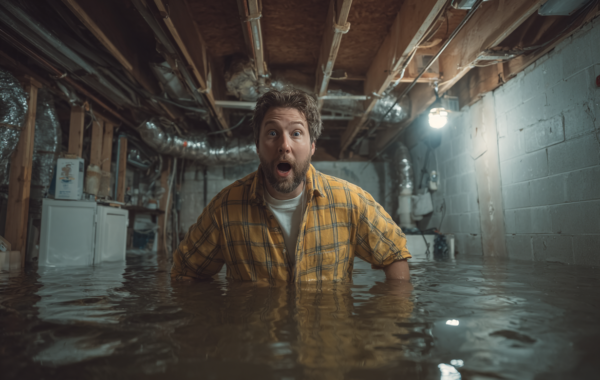
Heavy rainfall, melting snow, and foundation cracks often lead to basement flooding. Because basements already have limited airflow, mould growth accelerates quickly.
ROOF LEAKS
Ice dams, missing shingles, and storm damage allow water to travel along rafters and inside walls before visible signs appear. By the time stains show, mould often has a head start.
APPLIANCE LEAKS
Dishwashers, washing machines, refrigerators, and water dispensers frequently leak slowly. These silent leaks are one of the most common causes of hidden wall mould.
TOILET OVERFLOWS
Whether from blockages or mechanical failures, toilet overflows can saturate floors and walls. Depending on the source, water may be contaminated and require immediate remediation.
WATER HEATER FAILURES
When a water heater tank ruptures, it can flood large areas rapidly. Hot water also increases humidity, accelerating mould growth.
HVAC AND CONDENSATION DAMAGE
Improper insulation or blocked drainage can cause HVAC systems to sweat inside walls. This chronic moisture issue often leads to widespread mould before detection.
FIRE SPRINKLER DISCHARGE
Accidental sprinkler activation releases large volumes of water quickly, often affecting multiple floors and wall systems simultaneously.
STORM AND WIND-DRIVEN RAIN
Severe storms can force rain through siding, windows, and flashing. Wind-driven rain often penetrates areas normal rainfall doesn’t reach.
HOW FAST SHOULD YOU ACT AFTER WATER DAMAGE?
Time is critical. Mould can begin growing within 24 to 48 hours after water exposure.
Acting quickly reduces health risks, limits structural damage, and significantly lowers restoration costs.
Delays often mean more demolition, longer drying times, and higher insurance deductibles.
DOES INSURANCE COVER MOULD REMOVAL?
Insurance coverage depends on the cause. Mould resulting from sudden, accidental water damage—such as burst pipes or storm intrusion—is often covered when reported promptly.
Mould caused by long-term leaks or neglect is typically excluded.
This is why contacting a professional restoration company immediately helps protect your claim. They document the damage correctly and work directly with insurers.
SIGNS YOU NEED EMERGENCY MOULD REMOVAL
Musty or earthy odours that don’t go away
Visible black, green, or white patches on walls or ceilings
Peeling paint or bubbling drywall
Warped or soft wall surfaces
Unexplained respiratory symptoms indoors
If you notice any of these signs, waiting can make the problem significantly worse.
HOW TO CHOOSE THE RIGHT MOULD REMOVAL COMPANY
Choose a company that offers 24/7 emergency response, uses professional-grade drying and air filtration equipment, holds recognized certifications, and provides clear documentation for insurance purposes.
Experience with both water damage and mould remediation matters—these issues rarely exist in isolation.
FAQs
What should I do first if I find mould on my walls?
Avoid disturbing the area and call a certified mould remediation or water damage restoration company immediately for an assessment.
Can mould grow behind drywall without being visible?
Yes. Mould often grows inside wall cavities long before surface signs appear.
How much does mould removal cost in Canada?
Costs vary based on extent, location, and materials affected, ranging from a few thousand dollars to significantly more for severe cases.
Is mould removal an emergency?
Yes. Mould impacts health and spreads quickly when moisture remains present.
How long does professional mould remediation take?
Most projects take several days to a week, depending on severity and drying time.
Will mould come back after removal?
If moisture sources are properly addressed and drying is thorough, mould should not return.
Can I stay in my home during mould removal?
In minor cases, yes. Severe contamination may require temporary relocation for safety.
Does home insurance cover emergency water damage?
Many policies cover sudden water damage but exclude gradual leaks. Prompt reporting is critical.
How quickly can mould start growing after water damage?
Mould can begin developing within 24 to 48 hours in damp conditions.
Who should I call first: insurance or a restoration company?
Call a restoration company first to stop the damage, then contact your insurer with documented findings.
If you have any questions about our article “Who to call to remove mould from walls in Toronto?”