

How To Remove Black Water From Your Basement: Guide To Category 3 Water Cleanup
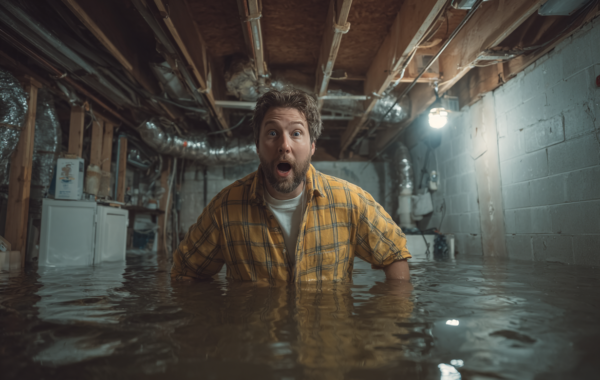
Discovering black water in your basement is one of the most stressful and hazardous situations a homeowner can face.
Black water also called Category 3 water, sewage water, or heavily contaminated floodwater carries dangerous bacteria, viruses, chemicals, and toxins.
Whether the source is a sewer backup, storm flooding, foundation failure, or a blocked municipal sewer line, swift and strategic action is essential to protect your health, your property, and the structural integrity of your home.
This guide walks you step-by-step through how to remove black water from a basement, explains the science behind Category 3 contamination, and gives you proven prevention strategies to keep toxic basement water from returning.
Understanding Black Water: Why Category 3 Flooding Is So Dangerous
Black water is the most severe level of water contamination. It is distinctly different from:
- Category 1 (clean water) — from broken supply lines, faucets, or condensation
- Category 2 (grey water) — from appliances, sump pumps, or lightly contaminated sources
Category 3 / Black Water contains high concentrations of pathogens, including:
- E. coli
- Salmonella
- Hepatitis A
- Norovirus
- Giardia
- Campylobacter
According to the CDC, sewage-contaminated water can contain more than 1 million microorganisms per millilitre, making exposure extremely hazardous. FEMA also reports that 90% of basements affected by black water develop mould within 24–48 hours if not properly dried.
Black water often includes:
- Raw sewage
- Chemical runoff
- Pesticides
- Oils and petroleum byproducts
- Heavy metals
- Debris from drains or municipal storm systems
Even brief contact can trigger severe illness, skin infections, and respiratory problems. Long-term exposure can lead to structural decay, mould infiltration, and foundational instability.
Immediate Actions To Take When You Discover Black Water
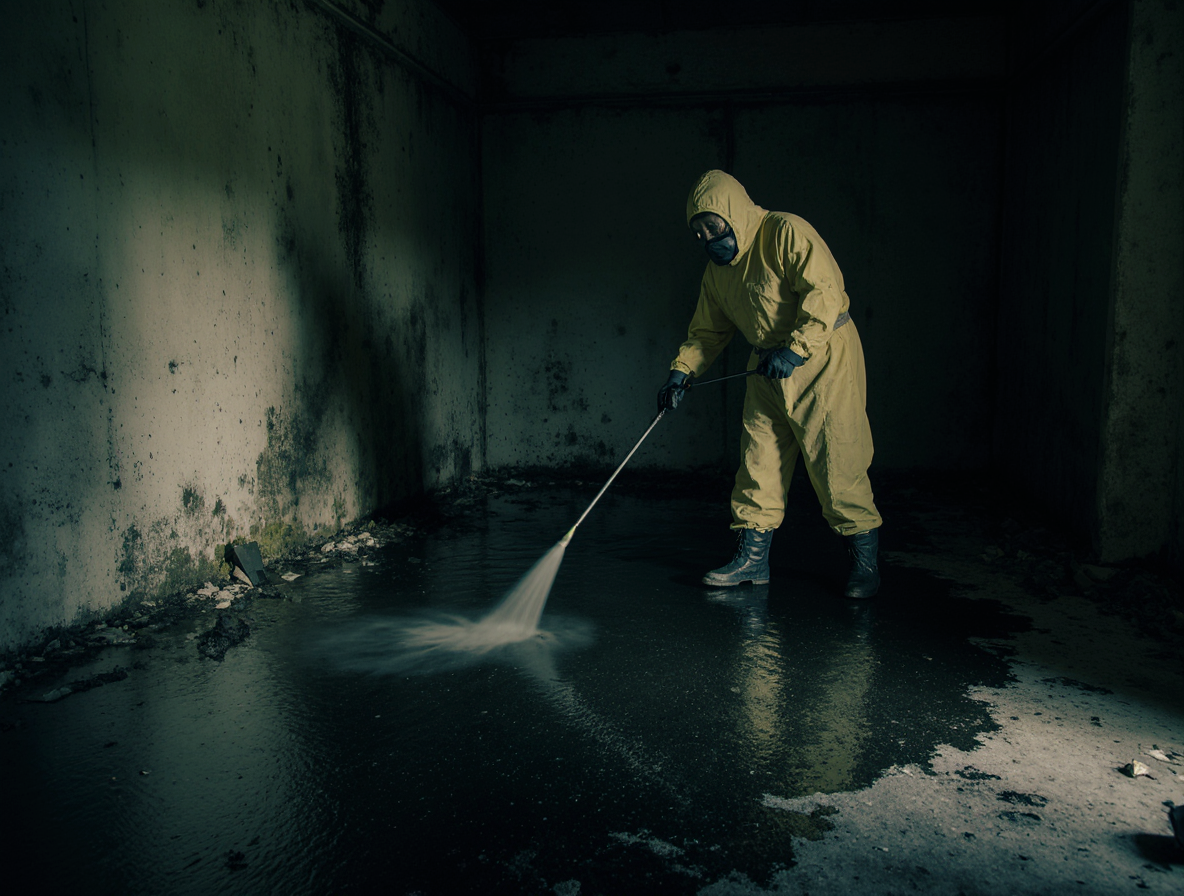
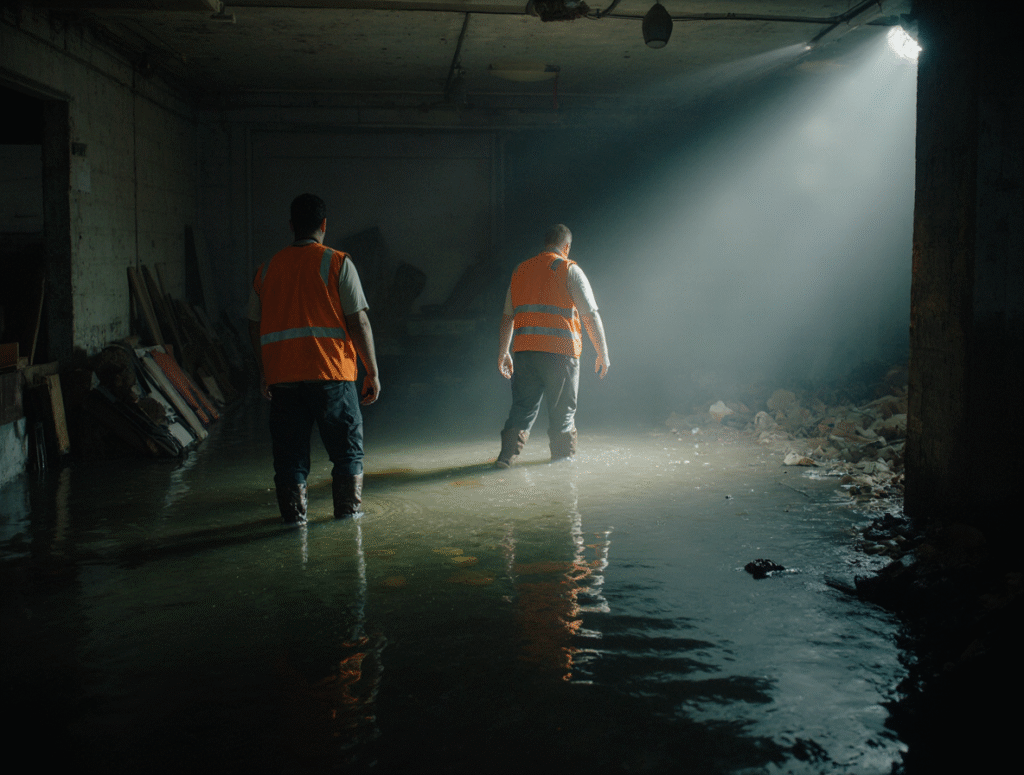
When dealing with black sewage water or contaminated basement floodwater, safety comes before cleanup.
1. Protect Yourself First
Before entering the space:
- Wear waterproof gloves
- Wear rubber boots
- Use an N95 or P100 mask
- Wear protective eyewear
- Avoid skin exposure
Never let children or pets near the contaminated area.
2. Shut Off Electricity To The Basement
If water has reached outlets or appliances, there is a risk of electrocution.
Always shut off basement power from the main breaker panel upstairs, not inside the flooded room.
3. Assess The Water Level And Source
The most common causes of Category 3 basement flooding include:
- Sewer line backups
- Heavy rainfall overwhelming storm drains
- Sump pump failure
- Foundation breaches
- Municipal sewer overload
- Toilet or wastewater pipe failure
If the water level is rising quickly, evacuate immediately and call emergency plumbing or restoration services.
4. Document Everything For Insurance
Most insurers require:
- Photos of standing water
- Videos of the affected area
- Clear evidence of the source (if identifiable)
- Inventory of damaged items
Sewage backups are often covered by add-on endorsements. Flood damage, however, typically requires a separate policy.
Assessing The Full Extent Of Contamination
Before learning how to remove contaminated black water from a basement, you must understand how far the contamination has spread.
Check These Areas Carefully:
- Flooring and wall cavities
- Drywall (soaks water up like a sponge)
- Insulation
- Baseboards
- Wood framing
- HVAC systems
- Stored items or furniture
- Electrical outlets
The EPA states that porous materials absorb black water within 30 minutes, making full replacement necessary in most cases.
If structural elements such as beams, joists, or foundation walls appear warped, cracked, or soft, professional inspection is mandatory.
How To Remove Black Water From A Basement (Step-by-Step)
Here’s the full breakdown for homeowners searching for how to clean sewage water from a flooded basement or how to safely remove black water.
1. Pump Out The Water
Use equipment designed for contaminated water:
- Submersible pump
- Trash pump
- Heavy-duty wet/dry vac (rated for sewage water)
Never dispose of black water onto your yard or municipal storm drains. Most cities require contaminated water to be discharged into:
- A sanitary sewer cleanout
- A designated disposal tank
- A licensed disposal facility
Improper disposal can lead to fines and environmental hazards.
2. Remove All Contaminated Materials
Anything porous that touched Category 3 water must be removed, including:
- Drywall
- Carpets and underpadding
- Area rugs
- Wood furniture
- Insulation
- Cardboard
- Mattresses
- Fabric or upholstered items
Keep in mind:
- Porous materials cannot be disinfected safely
- Mould will begin growing within 24 hours
Bag, seal, and dispose of these items according to local regulations.
3. Clean And Disinfect All Hard Surfaces
Use EPA-approved disinfectants that kill:
- Bacteria
- Viruses
- Mould spores
- Parasites
Clean all surfaces including:
- Concrete floors
- Metal shelving
- Plastic containers
- Tile
- Appliances
Do two rounds:
- first with detergent
- then with disinfectant
This ensures organic residue is removed before sanitizing.
4. Dry The Basement Completely
This is where most DIY basement sewage cleanups fail.
You must lower humidity and remove moisture deep inside wall cavities. Use:
- Industrial air movers
- Commercial dehumidifiers
- Fans
- Moisture meters
- Hygrometers
Normal indoor humidity is 30–50%. After a sewage flood, levels may hit 80–100%.
Basements are only “dry” when:
- Moisture readings return to baseline
- All structural elements test dry
- Humidity stabilizes below 50%
Drying can take 3–7 days, depending on severity.
Preventing Future Black Water Intrusions
Preventing future sewage backups or contaminated basement floods is essential.
Studies show that 98% of basements will experience water damage at least once in their lifetime and sewage backups are rising due to aging municipal systems.
Here’s How To Reduce The Risk:
1. Inspect Plumbing Annually
Have a licensed plumber check:
- Sewer lines
- Floor drains
- Wastewater pipes
- Cleanouts
- Tree root intrusion
2. Install a Backwater Valve
Homeowners with backwater valves report 94% fewer sewage backup incidents.
3. Maintain Your Sump Pump
Test it every 30 days. Replace every 5–7 years.
Install:
- Battery backup
- Secondary pump
- High-water alarm
4. Seal Foundation Cracks
Hydrostatic pressure from storms can push contaminated groundwater into the basement.
5. Waterproof Your Basement
Options include:
- Interior weeping tile systems
- Exterior membrane waterproofing
- French drains
- Drainage mats
- Sealants
6. Keep Your Property Graded Properly
Slope soil away from the foundation by at least 6 inches over 10 feet.
When Should You Call A Professional Water Removal Company?
A small spill from a drain? Fine.
A few litres of overflow from a toilet? Handleable.
But anything beyond a tiny incident should involve professionals.
Call a professional if:
- The water level is more than 1–2 inches
- The entire basement is affected
- The source is sewage or stormwater
- You see mould
- There’s structural damage
- You smell strong sewage odours
- The water touched drywall, insulation, or wood
Professional water damage companies use:
- Submersible extraction pumps
- Industrial air movers
- LGR dehumidifiers
- Thermal imaging scanners
- HEPA filtration
- Antimicrobial treatments
They follow IICRC S500 and S520 standards, ensuring your basement is restored safely and legally.
Cost Of Removing Black Water From A Basement
Prices vary depending on the source, contamination level, and affected materials.
Average Cost Ranges In Canada:
- Minor sewage backup: $2,000 – $5,000
- Moderate contamination: $5,000 – $10,000
- Severe basement flooding: $10,000 – $25,000+
- Structural repairs: additional $3,000 – $20,000+
According to the Insurance Bureau of Canada, water damage is now the #1 cause of home insurance claims, costing Canadians over $2 billion annually.
Conclusion
Learning how to remove black water from a basement isn’t just about draining contaminated water, it’s about protecting health, preventing mould, restoring structural safety, and stopping future sewage backups.
By following the steps in this guide, you can:
- Respond quickly
- Remove contaminated water safely
- Disinfect properly
- Dry the basement thoroughly
- Prevent future intrusions
- Know when to call a professional
If the situation is severe, the safest solution is always to call a certified water damage restoration company near you who have the tools and expertise to handle Category 3 contamination.
If you have any questions about our article “How To Remove Black Water From Your Basement: Category 3 Water Cleanup” or need flood water removal services near Toronto contact us at (647) 890-4991 or info@agcproconstruction.ca.