
How To Remove Mould From Drywall: A Complete Guide For Safe, Effective Mould Removal

How To Remove Mould From Drywall: A Complete Guide For Safe, Effective Mould Removal
Why Mould On Drywall Is A Serious Threat
- Explain how mould grows on drywall quickly because drywall is porous, organic, and moisture-sensitive.
- Mention Health Canada warnings: mould exposure can trigger allergies, asthma symptoms, and respiratory issues.
- Industry stat: mould can start growing within 24–48 hours after moisture exposure.
- Reference Canada’s rising humidity levels and water damage claims (IBC: water-related claims now exceed $3B annually).
- Explain the purpose of the guide (DIY vs professional removal, safety, prevention, FAQs).
- Reminder: Not all mould is safe to remove yourself—when in doubt, call a pro.
Understanding Why Mould Grows On Drywall
- Why drywall is highly vulnerable (paper backing = food source for mould).
- Most common causes:
- Flooding
- Plumbing leaks
- Roof leaks
- High indoor humidity
- Basement dampness
- Poor ventilation
- Explain how mould spreads behind walls invisibly.
- Mention that drywall with deep mould growth often cannot be salvaged.
Types Of Mould Commonly Found On Drywall
- Black mould (Stachybotrys chartarum) — when to avoid DIY removal
- Green mould (Cladosporium, Penicillium)
- White mould (early stage growth)
- Explain health risks
- Mention that professional mould inspectors use air sampling and surface tests
- Clarify that visible mould is only 10–20% of the actual growth
How To Tell If You Can Remove The Mould Yourself
Safe DIY Situations
- Surface-level mould under one square metre (per Health Canada and CMHC guidelines).
- Non-toxic growth caused by condensation or humidity.
- No structural water damage.
Call A Professional When:
- The mould area exceeds one square metre
- Black mould is present
- Drywall is soft, crumbling, or saturated
- A flood or sewage backup caused the moisture
- Someone in the home has respiratory issues
- Strong odours, hidden mould, or recurring outbreaks occur
- You see mould on insulation behind drywall
Safety Precautions Before Removing Mould
- Wear PPE: N95 mask, gloves, goggles
- Isolate the area by sealing vents and closing doors
- Turn off HVAC system
- Use plastic barriers for containment
- Avoid disturbing mould (prevents spores from spreading)
- Never mix bleach with other cleaners (dangerous fumes)
- Industry fact: mould spores can stay airborne for 24+ hours after disturbance
Tools And Supplies You’ll Need
- N95 mask or respirator
- Plastic sheeting & painter’s tape
- Scrub brush
- Spray bottle
- HEPA vacuum (not a regular vacuum)
- Commercial mould remover or DIY solution
- Utility knife
- Replacement drywall (if removal needed)
- Industrial fan or air mover
- Dehumidifier
Mention that HEPA filtration is essential because standard vacuums spread spores into the air.
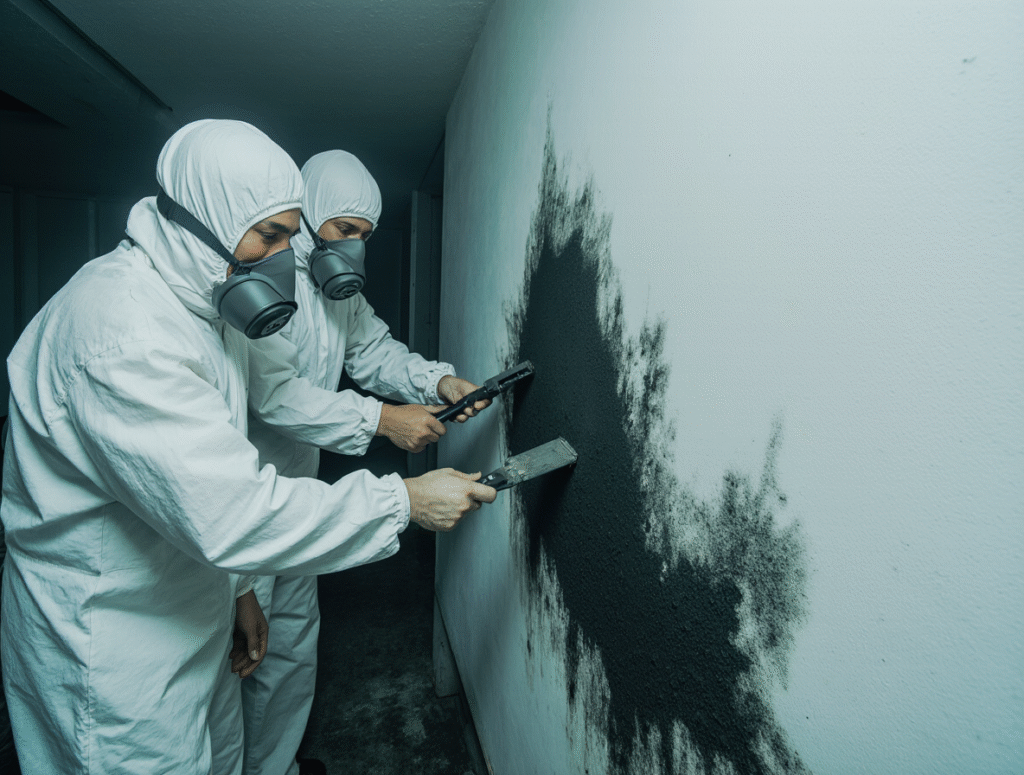
Step-By-Step Guide: How To Remove Mould From Drywall
Step 1: Identify The Source Of Moisture
- Fix leaks before cleaning
- No repair = mould returns within days
Step 2: Test The Drywall
- Press to check if it’s soft, crumbly, or swollen
- If yes → removal required, not cleaning
Step 3: Prepare The Area
- Seal with plastic
- Remove furniture
- Ventilate with fans pointing OUT, not IN
Step 4A: Removing Surface-Level Mould From Drywall
- Use cleaning solution (vinegar, 3% hydrogen peroxide, or commercial product)
- Apply and let sit for 10–15 minutes
- Scrub gently
- Avoid oversaturating the drywall
- Dry thoroughly with fans and dehumidifiers
Step 4B: Removing Deep Mould (Drywall Tear-Out)
- Cut 12–24 inches around affected area
- Bag and seal removed drywall immediately
- Vacuum studs with HEPA vacuum
- Spray studs with mould remover
- Dry and sanitize before installing new drywall
Step 5: Drying The Area Completely
- Use air movers and dehumidifiers
- Explain that moisture levels must fall below 15% to prevent regrowth
- Mention professional drying equipment (LGR dehumidifiers, high-static fans)
Step 6: Repaint Or Repair (If Needed)
- Use mould-resistant primer
- Use mould-resistant drywall if replacing
What NOT To Do When Removing Mould From Drywall
- Do NOT paint over mould (it resurfaces)
- Do NOT use regular household bleach (Health Canada notes it evaporates too fast to penetrate drywall)
- Do NOT use fans that blow spores deeper into the home
- Do NOT attempt to clean black mould yourself
- Do NOT reuse contaminated sponges or cloths
How To Prevent Mould From Returning
- Maintain indoor humidity 30–50%
- Install exhaust fans in kitchens/bathrooms
- Use a dehumidifier in basements
- Fix plumbing leaks immediately
- Improve ventilation
- Add mould-resistant drywall and paint
- Install sump pump or backwater valve if flooding was involved
- Gutter and downspout maintenance
- Home insulation and vapour barrier tips
Include stats:
- Homes with poor ventilation have 3x higher mould risk
- 70% of basement mould in Ontario is linked to humidity, not leaks
When To Call A Professional Mould Remediation Company
- Black mould or toxic species present
- More than one square metre affected
- Flood or sewage caused the moisture
- Recurring mould after DIY attempts
- Mould found behind walls, in attic, or HVAC
- Strong musty odour with no visible mould
- Health issues developing in household members
Explain benefits of professional remediation:
- HEPA negative air machines
- Antimicrobial fogging
- Thermal imaging for hidden leaks
- Moisture mapping
- Insurance documentation
- Safe tear-out and disposal
Cost Of Mould Removal In Canada
Breakdown:
- Small area (DIY-safe): $50–$150 for supplies
- Professional surface mould removal: $400–$800
- Full drywall tear-out + remediation: $1,500–$5,000+
- Post-flood mould remediation: $3,000–$10,000+
- Insurance may cover mould if caused by sudden water damage
Mention that ignoring mould can lead to repairs 5–10x more expensive.
How Long Does Mould Removal And Drying Take?
- Small DIY job: 1 day
- Professional tear-out job: 1–3 days
- Drying time: 3–7 days
- Anti-mould treatment cure time: 24 hours
- Reconstruction: additional 1–3 days
Conclusion: Act Quickly, Stay Safe, And Stop Mould At The Source
- Recap urgency: mould grows fast, spreads silently, and impacts health.
- Professional help can save time, protect your home, and prevent regrowth.
- Encourage homeowners to tackle moisture problems early, maintain ventilation, and monitor humidity.
- Reinforce: the right steps now prevent expensive repairs later.
EMERGENCY WATER DAMAGE FAQs
These FAQs tie water damage and mould remediation together—boosting topical authority.
What should I do first when I discover water damage?
Shut off the water source if possible, then call a professional restoration company.
How long until mould starts growing after water damage?
Typically 24–48 hours, especially in warm or humid environments.
Is water damage covered by home insurance?
Sudden, accidental damage often is—overland flooding usually requires extra coverage.
Can I stay in my home during water damage cleanup?
It depends on contamination, safety hazards, and mould levels.
How long does it take to dry a home after water damage?
Most homes dry in 3–7 days with commercial equipment.
Is flood water dangerous?
Grey and black water can contain sewage, chemicals, and harmful bacteria.
Can I clean up water damage myself?
Minor leaks may be manageable, but deep or contaminated water requires professionals.
What’s the difference between water extraction and drying?
Extraction removes visible water; drying removes moisture trapped inside materials.
Why does my home smell musty after water damage?
A musty odour signals mould beginning to grow.
When should I call a professional restoration company?
Immediately if water is contaminated, spreading fast, or affecting drywall, ceilings, or multiple rooms.
If you have any questions about our article, “How To Remove Mould From Drywall: A Complete Guide For Safe, Effective Mould Removal” or need emergency mould removal services near Markham and the Greater Toronto Area, contact us at (647) 890-4991 or connect with us on social media.